The Shift From Occasional Facials to Routine Skincare
Skincare Is No Longer an Occasional Luxury
For years, professional facials were treated as something people did occasionally.
A birthday treat.
A vacation splurge.
Something saved for special events.
But that mindset has been changing.
As skincare education becomes more accessible and consumers pay closer attention to long term skin health, professional treatments are starting to look less like indulgence and more like routine maintenance.
Just like haircuts, gym memberships, or dental cleanings, skincare is gradually becoming something people schedule regularly instead of occasionally.
That growing awareness is creating space for new types of skincare service concepts.
Curious how this shift is creating new business opportunities?
Explore what ownership in this category can look like.
The Rise of Routine Skincare
Consumers today understand that good skin rarely comes from a single appointment.
Consistency matters.
Regular treatments help maintain results, address new concerns, and support the effectiveness of products used at home.
Because of this, many clients now prefer services that are designed to fit into their schedules more easily. Instead of spending half a day at a spa, they are choosing focused treatments that deliver results in less time.
Shorter, targeted appointments allow skincare to become part of a monthly routine rather than a rare experience.
When a service fits naturally into someone’s lifestyle, repeat visits follow.
If a business built around repeat clients interests you, this may be worth exploring.
Why Simpler Concepts Are Gaining Attention
Traditional spas often offer large menus of treatments that require long appointments and complex scheduling.
While that approach still has its place, many consumers are looking for something more straightforward.
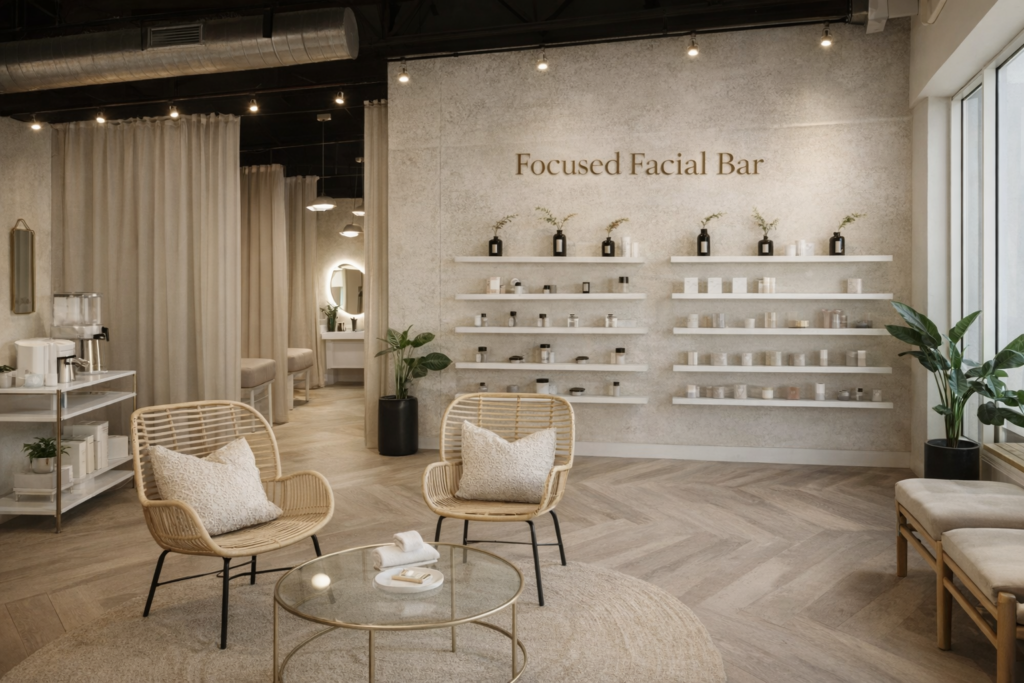
A focused skincare studio simplifies the experience.
Clients know exactly what services are available. Appointment times are easier to book. Treatments are efficient but still effective. The environment feels modern and approachable rather than formal or intimidating.
This structure makes professional skincare easier for people to incorporate into their regular routine. And when something becomes part of a routine, demand tends to grow.
Some opportunities are built on trends. Others are built on habits.
Learn how this concept is structured behind the scenes.
A Business Model Built Around Frequency
From a business perspective, frequency is one of the most important factors in service industries.
Businesses that rely on occasional visits must constantly search for new customers. Businesses that encourage regular visits build momentum through repeat clients.
Skincare naturally supports that second model.
Clients who see visible improvements often return monthly. Many also purchase products recommended by their skincare professional to maintain results between visits.
Over time this creates a combination of service revenue, membership programs, and retail sales that all reinforce each other.
The result is a business that grows through ongoing relationships rather than one time transactions.
Businesses built on relationships tend to last longer.
See how this model is designed to support long term growth.
A Category That Continues to Expand
The beauty services market continues to expand as consumers invest more in self care, personal appearance, and wellness.
Within that larger industry, skincare services have become one of the fastest growing segments. Education through social media, dermatology content, and product transparency has made consumers more aware of what professional treatments can accomplish.
At the same time, modern service concepts have made those treatments easier to access.
When awareness and accessibility increase at the same time, demand tends to follow.
That is exactly what the skincare category is experiencing right now.
Industries evolve. The question is whether you want to participate in the next phase.
When Business Ownership Meets a Growing Trend
For entrepreneurs exploring opportunities in the beauty industry, the appeal of this category often becomes clear after looking at how the business model works in practice.
Professional skincare services operate at the intersection of expertise, routine care, and customer relationships. Clients return because they see results and trust the guidance they receive.
That relationship creates loyalty that many service businesses struggle to achieve.
The real question for many prospective owners is not whether people care about skincare.
It is whether they want to participate in a business that is positioned inside a growing consumer habit.
Understanding the business model is the first step.
The next step is simply learning how it operates behind the scenes and deciding whether it aligns with the kind of business you want to build.
If the idea of owning a business in the self care space feels worth exploring, scheduling a conversation is often the easiest way to start evaluating whether the opportunity fits your goals.
Pro Tip:
Every business opportunity looks interesting on paper.
What matters more is understanding how the model actually works in the real world. How clients are attracted. How revenue is generated. And what daily ownership really looks like.
A short conversation can answer questions that hours of online research usually cannot.
https://franchisingpath.com/schedule-a-call/