When a water damage restoration crew deploys to a disaster site, whether caused by storms, a broken pipe, or fire, the first thing you’ll notice is their specialized restoration equipment. Gone are the days of basic wet/dry vacs and box fans; instead, you’ll observe a well-orchestrated array of advanced gear. From pumps extracting standing water to sleek vacuum hoses leading to a truck, neatly arranged dehumidifiers and air movers, quietly humming air scrubbers, and meticulous technicians using moisture meters and cameras to assess the situation.
This isn’t random. Restoration companies rely on a predictable set of tried-and-true systems that include extraction gear, drying systems, air quality equipment, along with cleaning tools and safety kits. Together, they form a cohesive strategy for responding to water damage, fire damage, mold remediation, biohazard cleanup, or other types of property damage.
Technicians are trained to operate this sophisticated equipment according to manufacturer guidelines and adhere to standards set forth by the Institute of Inspection, Cleaning and Restoration Certification (IICRC). These skills are honed through practical, hands-on courses rather than theoretical articles alone.
Exploring the restoration industry as a potential restoration business owner, or simply understanding the business framework adopted by major restoration franchises, involves recognizing these essential equipment categories.
By the end of this comprehensive guide, you’ll grasp how restoration equipment collectively supports the restoration process, the intricacies of moisture removal and air quality control, and the significance of specialty tools in handling most types of restoration work.
Whether you’re seriously considering restoration franchise ownership or simply curious, this can be crucial knowledge on how these franchises effectively deliver restoration services and maintain excellent customer response.
The Main Categories of Restoration Equipment Franchises Rely On
Restoration equipment is essential in managing a variety of restoration projects, particularly in addressing water damage, mold remediation, and fire aftermaths.
It’s true that, at a high level, the majority of crucial equipment in the restoration industry falls into a few predictable buckets: tools that remove liquid water, tools that dry what’s left, tools that clean the air and surfaces, instruments that tell you what’s really happening, and the safety gear that lets crews work in damaged buildings without taking unnecessary risks.
On every professional job, restoration franchises pull from the same core categories and scale them up or down depending on how much water they’re dealing with, what property and contents got wet, and how contaminated it is.
These categories align with IICRC standards and certifications, such as Water Restoration Technician (WRT) and Applied Structural Drying (ASD), to ensure compliance with industry best practices.
- Extraction equipment: Pumps and extractors that remove standing and trapped water from floors, carpets, and wall cavities following water damage events like storms.
- Structural drying systems: Commercial dehumidifiers, such as LGRs (Low Grain Refrigerants), and air movers that pull moisture out of materials and air, utilizing wall cavity drying systems, floor mat drying systems, and injected air systems.
- Air quality and odor control: HEPA air scrubbers, negative-air machines, air filtration devices, and deodorizing tools for managing airborne contaminants, ensuring air quality post-disaster.
- Monitoring and documentation tools: Moisture meters, thermo-hygrometers, thermal imaging cameras, and software for readings, sketches, and logs that facilitate communication with insurance companies and adjusters.
- Cleaning and disinfection gear: Sprayers, foggers, hot-water extraction units, cleaning chemicals, and HEPA Vacuums designed to handle mold and fire restoration.
- Safety and support equipment: Personal protective equipment (PPE), containment walls, power distribution, lighting, and access gear that safeguard restoration technicians and ensure compliance during operations.
As a potential franchise owner, you’re not just investing in restoration equipment but building these categories into a replicable system for effective response to various claims across the restoration industry. This approach enhances restoration processes, fosters strong working relationships with insurance companies, and maintains excellent customer satisfaction.
How Franchises Remove Water with Pumps and Extractors
Extraction is usually the first major task in water damage restoration jobs. Restoration businesses leverage a combination of restoration equipment, such as submersible pumps, truck-mounted and portable extractors, and specialized tools that connect to those machines. This equipment is crucial for effectively responding to claims and performing restoration services, allowing crews to pull water out of basements, living rooms, and tight spaces. Quick action before water soaks in further minimizes the risk of structural damage, mold, and issues requiring mold remediation.
The faster your team removes liquid water, the more efficient the drying systems are in reducing warping, mold, and structural issues. Effective extraction not only preserves the property but also improves customer satisfaction. This rapid response can significantly lower restoration costs and claims with insurance companies or adjusters.
Key Extraction Tools You’ll See on Most Trucks
On sites with deep standing water, franchises start with high-capacity submersible pumps that sit directly in the water and move large volumes outside through discharge hoses.
Once water depth decreases, crews switch to truck-mounted extractors: powerful vacuum systems built into the franchise vehicle pull water from carpets, pads, and hard surfaces, a crucial part of the water damage restoration process.
When dealing with restricted access or upper-floor water incidents, portable extractors do the same job with a smaller footprint. The versatility lies in the tools that attach to these extractors, contributing to efficient restoration processes:
- Weighted tools and “rovers” exert pressure to flush water out of carpets and pads while vacuuming.
- Carpet wands and squeegee tools customize the extractor for various surfaces like carpets, tile, and concrete.
- Specialty extraction heads address stairs, edges, and confined corners, ensuring thorough water removal.
Importance of Extraction Capacity in Restoration Services
An owner’s extraction capacity, determined by how much water can be moved, how quickly, and in which types of spaces, dominates their ability to handle multiple water damage restoration jobs simultaneously.
Effective extraction systems are vital in responding to disasters and storms while maintaining compliance with standards such as ANSI s500 and IICRC certifications like Water Restoration Technician (WRT) offered by top franchise networks. This also fosters strong communication with insurance companies and adjusters.
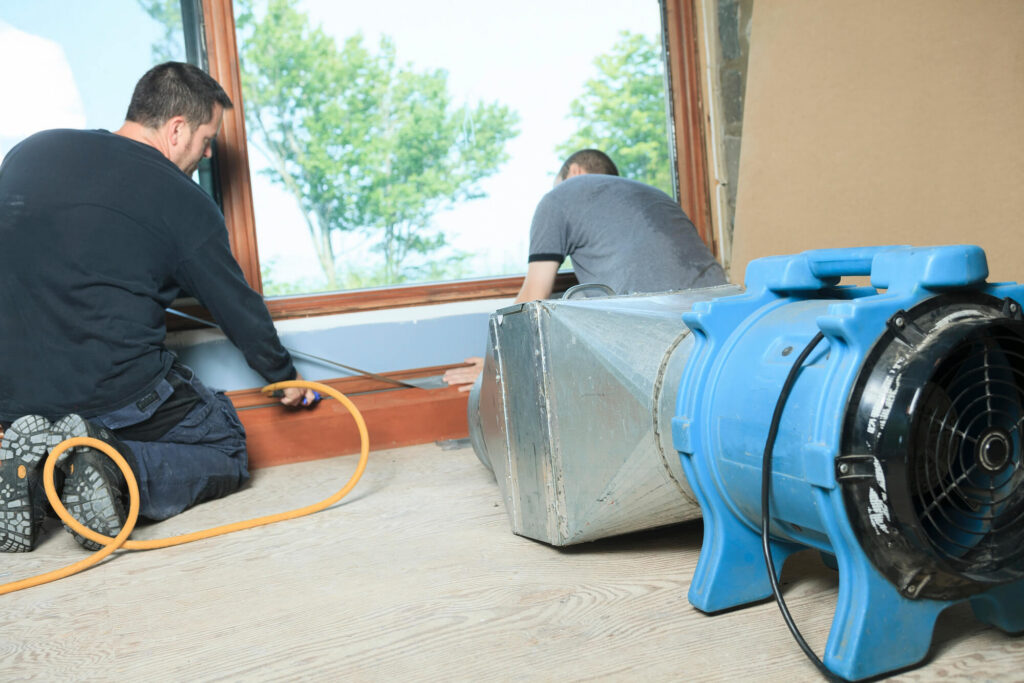
Drying Equipment Essentials: Dehumidifiers and Air Movers
Once visible water damage is managed, the bigger challenge is eliminating bound moisture from wood, drywall, concrete, and the air itself. Restoration businesses address this through the use of specialized drying equipment, including commercial dehumidifiers and strategically placed air movers.
This comprehensive system, vital for effective water damage restoration, works to extract moisture from materials and the surrounding environment until moisture readings reach a defensible “dry standard.”
In practical terms, water damage restoration crews are consistently creating optimal conditions in the property: ensuring the air is dry enough to accept moisture, maintaining sufficient air movement across wet surfaces to free moisture, and allowing adequate time for the systems to work efficiently. This is why drying plans rely on precise calculations and daily moisture meter readings rather than guesswork.
Most restoration businesses utilize two primary types of dehumidifiers: Low-grain refrigerant (LGR) units, which leverage cold coils to remove moisture from the air, are the standard choice for most homes and light commercial work. Desiccant dehumidifiers, which pass air over moisture-absorbing material, prove especially useful in cold, damp, or expansive spaces, such as those impacted by storms.
Here’s a simplified perspective on the core drying systems these franchises use:
| System Type | Best For | Typical Jobs |
| LGR Dehumidifier | Normal temperatures, small–mid spaces | Homes, offices, small retail spaces |
| Desiccant Dehumidifier | Cold or very large, complex spaces | Warehouses, high-rise cores, large-scale storms |
| Air Movers | Any wet surface | Walls, floors, cavities, under cabinets |
Restoration franchises commonly use air movers, either centrifugal or axial fans, to push dry air across wet surfaces. Their role is to disrupt the saturated layer of air on surfaces, promoting evaporation into the drier air that dehumidifiers create.
Enhanced methods for complex drying situations might include floor mat drying systems or wall cavity drying systems, designed to dry from above or behind without dismantling structural elements.
Restoration companies also adhere to industry standards like the IICRC S500, which are essential for effective mold remediation, mitigating potential health risks from mold spores and other airborne contaminants using air filtration devices, such as HEPA air scrubbers, and ensuring customer quality customer service through robust communication with homeowners, insurance companies, and adjusters.
This multifaceted approach not only ensures thorough drying and mold prevention but also enhances the restoration process’s efficiency, safeguarding property and advancing franchise success.
Why Moisture Meters and Documentation Matter as Much as the Big Machines in the Restoration Industry
Moisture detection and documentation don’t look impressive on a truck, but they’re what prove when a building is actually dry, guide your adjustments, and support your invoices and liability. Without numbers, even the best restoration equipment setup comes down to “it looks fine,” which is not enough for homeowners’ peace of mind, property managers, or when it’s time to process insurance claims.
Visually dry is not the same as structurally dry. A wall can look normal long before the studs and insulation behind it are back in a safe range. That’s why restoration franchises invest in tools and consistent procedures, then align them with industry standards and current training, so different crews approach readings in the same way.
Three tool groups carry most of this workload:
- Moisture meters check inside materials and compare wet areas to dry, unaffected benchmarks.
- Thermo‑hygrometers track temperature and relative humidity so you can see whether your drying plan is working.
- Thermal imaging cameras reveal temperature differences that often point to hidden wet spots.
Crews establish a “dry standard” by testing similar, unaffected materials, then track readings in affected areas until they match within an acceptable range. Those numbers, along with photos, sketches, and equipment lists, form drying logs and job reports.
As an owner in the restoration business, that paper trail is what turns hard physical work into something that can be reviewed, approved, and defended if questions come up later on behalf of property owners or during the insurance claims process.
The Special Restoration Equipment for Higher-Risk Jobs
For higher‑risk or dirtier losses, restoration franchises add air-quality, cleaning, and safety equipment, such as HEPA air scrubbers, containment walls, and personal protective equipment (PPE), to protect both crews and property occupants. The more contaminated or long‑standing the water, the less this is optional and the more it becomes part of your basic duty of care in water damage restoration.
HEPA Air Scrubbers
In projects involving significant contamination risks, such as those with sewage backups or mold growth, maintaining air quality is paramount. Restoration franchises utilize HEPA air scrubbers, or HEPA vacuums, to pull room air through high-efficiency particulate air filters, effectively trapping contaminants.
Negative-Air Machines
Negative-air machines may also be deployed to create a negative-pressure environment, which prevents airborne contaminants from drifting into clean areas. This is especially important when dealing with hazardous materials and maintaining a safe workspace.
Containment Walls
To ensure effective control of dust and contaminants, plastic containment walls and zipper doors are set up to define work zones. Simple pressure monitors often accompany these to ensure the area remains under the desired pressure conditions, further preventing cross-contamination to clean areas.
Surface Cleaning Tools
Restoration crews also employ sprayers with cleaning chemicals and foggers to treat surfaces comprehensively, ensuring contaminants are fully removed and sanitary conditions are restored.
Personal Protective Equipment (PPE)
Safety for workers is paramount in high-risk restoration jobs. Crews are equipped with personal protective equipment (PPE) suitable for the specific risk level, including gloves, eye protection, respirators, and protective suits when necessary. This gear helps protect individuals from direct contact with hazardous substances.
Additional Safety Tools
Beyond PPE, franchises utilize tools like thermal imaging cameras, infrared cameras, moisture meters, and thermo hygrometers for precise assessment and measurement of the affected area. These tools ensure accurate evaluation, guiding effective intervention strategies. For operational safety, extension cords, temporary panels, and job lighting are strategically employed to reduce electrical risk and trip hazards in wet environments.
For a franchise, these solutions roll up into three simple themes: safe air, safe people, and safe power. As a potential owner, they’re also a good lens for evaluating how seriously a brand takes risk and compliance.
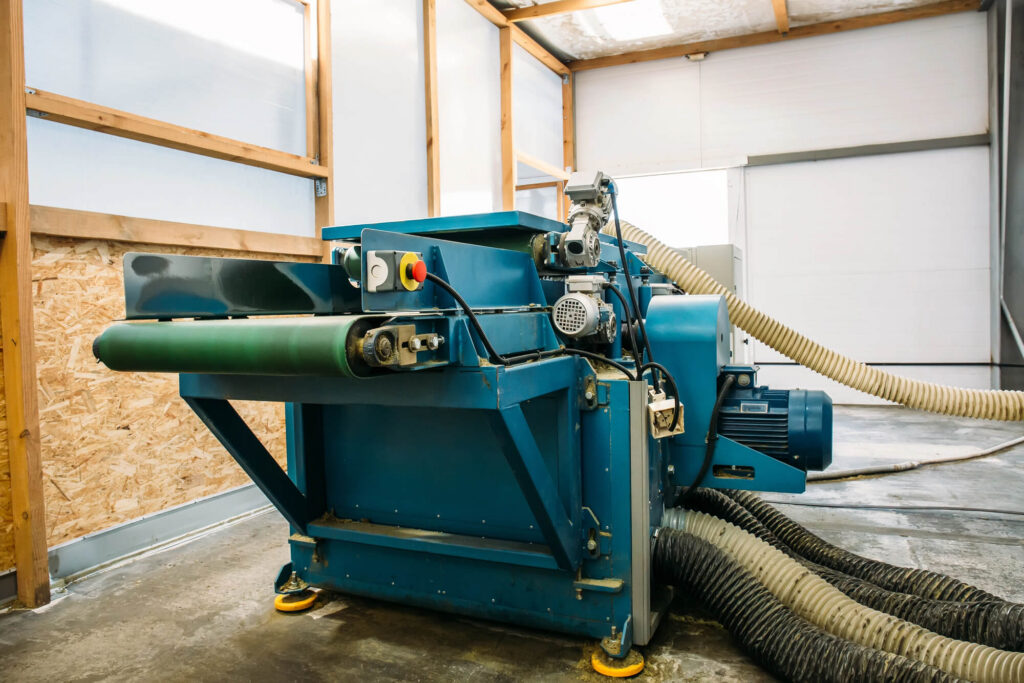
Specialty Water Restoration Equipment for Hardwood Floors, Walls, and Contents
Beyond the core equipment, restoration companies often use specialty tools that let them save finishes and contents that might otherwise be written off during mold remediation or water extraction services. These tools don’t go on every truck roll, but they can make a big difference on higher‑value properties and commercial restoration work.
For hardwood and other sensitive flooring, floor mat drying systems connect to an extractor or negative‑pressure system and pull moisture up through seams without tearing the floor out. For walls and cavities, injected air systems and wall cavity drying systems move dry air into enclosed spaces through small drilled holes, then pull moist air back out.
On the contents side, you may see:
- Ultrasonic cleaning systems for small items and detailed contents.
- Wash systems and drying rooms for soft goods and textiles.
- Ozone or hydroxyl generators are used, within current safety guidance, on some fire and smoke jobs.
For you as an owner, these specialty tools are how you expand what your restoration business can say “yes” to, especially for insurance adjusters, property managers, and commercial property owners within the restoration industry who care about saving finishes and contents when it’s practical to do so.
How Franchises Stage, Store, and Maintain their Disaster Restoration Equipment and Fleets
All of this water or disaster restoration equipment only pays off if it’s organized, available, and working when a call comes in. That’s why most franchised restoration companies put as much thought into warehouse layout and maintenance as they do into the initial buying decision.
In a typical shop, you’ll see indoor air quality equipment like dehumidifiers, air movers, and air scrubbers stacked or racked in defined zones, with labels or barcodes that make it easy to pull the right quantity for a job and track where it went.
Cords, hoses, containment plastic, and personal protective equipment (PPE) are grouped so crews can stage an entire job quickly without hunting through piles of mixed gear.
Maintenance and calibration live in the background but matter a lot:
- Scheduled cleaning and filter changes keep dehumidifiers, air scrubbers, and vacuums efficient.
- Electrical checks and basic repairs reduce downtime and safety issues.
- Meter calibration and replacement help keep readings trustworthy over time.
From an ownership perspective, that warehouse discipline is what lets you scale beyond a single truck. It turns disaster restoration equipment from “stuff you own” into an asset base that can reliably support multiple crews, higher job volumes, and different loss types throughout the year.
How All This Disaster Restoration Equipment Works Together on Real Jobs
On real losses, the value of the equipment shows up in the sequence. Crews aren’t just dropping pumps and air filtration devices in a room. Instead, they’re following a consistent order that turns a stressful water or fire damage situation into a controlled reconstruction plan you can explain and document.
For example, a typical water or storm damage restoration job follows a pattern like this:
- Stabilize and stop the source so that water has stopped coming in and basic safety issues are under control.
- Extract standing and trapped water with pumps and extractors to remove as much liquid as possible.
- Set up drying and air‑quality gear with dehumidifiers, air movers, and air scrubbers sized and placed for the space.
- Monitor, adjust, and demobilize once readings hit target levels and the building is ready for repairs.
That’s the same on a small hallway leak and a larger multi‑room loss; only the scale changes.
On the first visit, the crew focuses on safety, source control, and extraction. As materials move from “soaked” to “damp,” they lay out air movers along walls and across floors, add the right mix of dehumidifiers, HEPA air scrubbers, and bring in containment walls where risk calls for it. Over the next few days, technicians return to take readings with moisture meters, adjust layout and counts, and document progress until affected areas match the dry standard they set from unaffected materials.
As an owner, you’re really buying a repeatable pattern from a restoration franchise: proven equipment mixes, layouts, and monitoring habits that can be taught, supervised, and scaled, rather than improvising a new approach on every call.
When it Makes Sense to Explore Restoration Franchising Further
If you like the idea of running a business built on clear systems, well‑defined equipment, and measurable results, restoration is worth a closer look. The work is hands‑on and sometimes stressful, but the playbook, extract, dry, clean, document, and hand off for repair, stays remarkably consistent, job after job and year after year.
The next step isn’t picking a brand; it’s deciding whether this kind of day‑to‑day reality fits your goals, risk tolerance, and lifestyle.
A focused conversation with a franchise consultant can help you translate gear lists and process charts into practical questions: what a realistic starter setup looks like, how staffing and scheduling actually feel, and which restoration models line up with your strengths.
If you want that kind of grounded, education‑first guidance, you can sit down with Franchising Path to explore whether restoration franchising belongs in your plan and, if it does, how to approach it on terms that make sense for you.