Some of the most profitable franchise businesses don’t rely on trends, foot traffic, or consumer impulse spending.
They rely on something far simpler: solving a problem that never goes away.
Across the country, millions of apartment residents generate trash every single day. Property managers are expected to maintain clean communities, reduce complaints, and increase resident satisfaction all without increasing operational headaches.
This is where a specific service-based franchise model has quietly gained traction, especially among owners looking for recurring revenue, long-term contracts, and scalability without retail complexity.
See how this type of franchise actually works.
A Growing Industry Hiding in Plain Sight
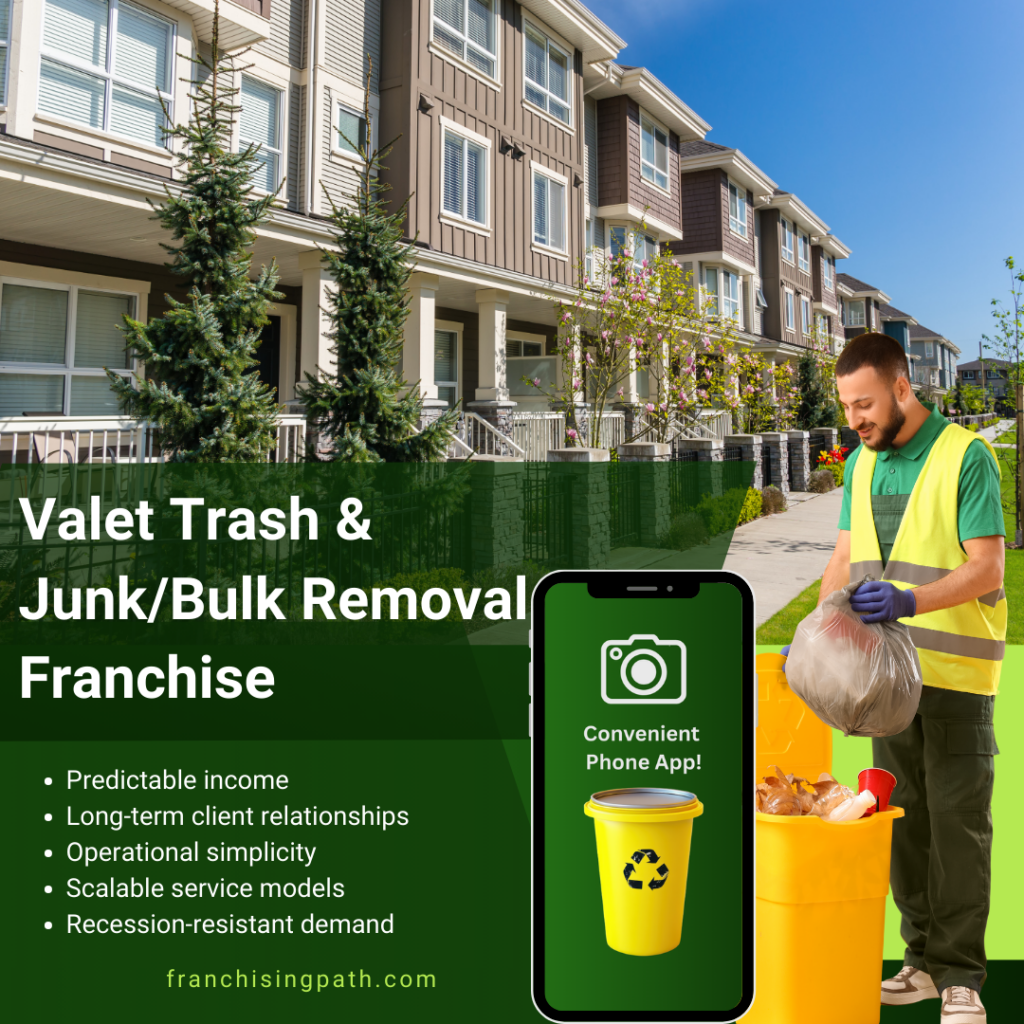
Apartment valet trash services have become an expected amenity in many communities.
Residents no longer want to haul trash across large complexes, late at night, in bad weather, or with physical limitations. Property managers, in turn, benefit from cleaner hallways, fewer complaints, and increased retention.
What many people don’t realize is how underpenetrated this market still is.
Out of tens of millions of apartment units in the U.S., only a fraction currently use valet trash services. That gap represents opportunity especially in secondary and tertiary markets where demand already exists but service providers are limited.
Why Recurring Revenue Changes the Ownership Experience
One of the biggest advantages of this franchise model is contract structure.
Valet trash services are typically sold on multi-year agreements, often ranging from three to five years. Once a property is secured, revenue becomes predictable and consistent.
You don’t need hundreds of customers to build a meaningful business. In many cases, a relatively small number of well-managed properties can generate reliable monthly income.
This kind of predictability allows owners to plan, scale intentionally, and avoid the constant pressure of chasing one-off sales.
Explore predictable franchise models like this.
Two Complementary Services, One Business Model
What makes this opportunity especially compelling is that it combines two high-demand services into one operation:
Apartment Valet Trash
- Nightly or scheduled doorstep pickup
- Long-term property contracts
- Minimal customer churn
- Predictable labor scheduling
Junk and Bulk Item Removal
- Furniture and appliance removal during move-ins and move-outs
- On-demand services with higher ticket values
- Strong add-on revenue from existing relationships
Instead of relying on a single revenue stream, owners benefit from both recurring income and supplemental high-margin jobs, often from the same property management clients.
Technology That Creates a Competitive Advantage
In service-based franchises, efficiency and transparency matter.
Advanced mobile technology now allows customers to receive instant pricing based on photos, eliminating guesswork and improving trust. Billing transparency, documentation, and reporting tools also reduce friction with property managers, one of the biggest reasons contracts get renewed year after year.
For franchise owners, this means fewer disputes, faster approvals, and smoother operations.
Technology doesn’t replace leadership but it amplifies it.
Why Property Managers Say Yes
From a property management perspective, this service checks every box:
- Residents get convenience and cleaner communities
- Management reduces complaints and maintenance issues
- The cost is passed to residents, not absorbed by ownership
- The property gains a new revenue stream
It’s rare to find an amenity that benefits all parties equally. That’s why these services are often described as easy to sell and hard to replace once implemented.
No Industry Experience Required
This franchise model isn’t built for waste industry veterans.
It’s built for owners who are good at:
- Managing people
- Building relationships
- Following systems
- Selling value, not volume
Training, operational support, and established systems allow owners to focus on growth instead of technical complexity. Many successful franchisees entered with no prior experience in trash, recycling, or junk removal.
The model rewards consistency, execution, and leadership not technical expertise.
Find out if this kind of ownership fits your background.
Scalability Without Retail Overhead
Unlike retail franchises, this model avoids:
- Expensive buildouts
- Long construction timelines
- Customer-facing storefronts
- High fixed overhead
Routes, staffing, and contracts can be scaled methodically. Owners often begin with a manageable territory and expand through additional properties, equipment, or service lines.
For those seeking semi-absentee ownership, this structure provides flexibility as systems mature.
The Bigger Picture
Waste removal isn’t glamorous but it’s essential.
Americans generate massive amounts of waste every year, and multi-family housing continues to grow. Businesses that support this infrastructure aren’t going away. In fact, they tend to perform well even during economic uncertainty because the need doesn’t disappear.
This is the kind of franchise that doesn’t rely on hype. It relies on necessity.
Is This the Right Franchise Path for You?
This opportunity tends to resonate with owners who value:
- Predictable income
- Long-term client relationships
- Operational simplicity
- Scalable service models
- Recession-resistant demand
If you’re exploring franchise ownership and want to understand whether a service-based, recurring revenue model like this aligns with your goals, the right next step isn’t choosing a brand—it’s gaining clarity.
Some of the strongest franchise businesses don’t ask, “What’s exciting right now?”
They ask, “What problem will still need solving ten years from now?”
This model answers that question clearly.
You don’t need more research. You need perspective. Book a call and let’s walk through it.