• Skip to main content
  • Skip to footer
(866) 714-7703 Get a FREE Consultation

Franchising Path

Connecting You to Your Future

  • Find Your Franchise
    • All Available Franchises
    • Beauty Franchises
    • Children’s Franchises
    • Crime Scene Cleanup
    • Critter Control Franchises
    • Food Services Franchises
    • Health & Fitness Franchises
    • Junk Removal Franchises
    • Lawn Care Franchises
    • Mosquito Control Franchises
    • Pest Control Franchises
    • Pet Franchises
    • Roofing Franchises
    • Senior Services Franchises
    • Swim School Franchises
    • Tree Service Franchises
    • Water Damage Franchises
  • Success Stories
  • Our Process
  • Franchise Consulting

Ryan Perry

The Quiet Franchise That Keeps Growing When Others Stall

Think about the last time you noticed a parking lot.

It probably was not because it looked great. But because something was wrong.

Lines were faded. Traffic felt confusing. Accessibility markings were unclear. The surface felt neglected.

That reaction is exactly why this industry exists.


Commercial property owners cannot afford confusion, safety issues, or non-compliance. Those problems create risk, complaints, and liability.


So they plan for maintenance. They budget for it. They schedule it again and again.

This is not impulse spending but an operational necessity.


→ See why predictable service businesses quietly outperform trend-driven franchises


Why Pavement Maintenance Is Not a One Time Service


If you have ever managed a commercial property or even paid attention to one, you already understand this on some level.

Parking lot striping, seal coating, and pavement repairs are not optional forever tasks. They are recurring responsibilities.

Paint fades under traffic and weather. Seal coating wears down. ADA compliance standards evolve. Safety expectations increase.


This creates something many business owners quietly crave. Predictability.


Property owners budget for these services year after year. They plan for them. They schedule them. They depend on reliable providers who show up and do the job right.

That is a very different revenue dynamic than chasing one time customers. This is why pavement maintenance continues to grow even when other industries slow down.


→ Talk through whether recurring-demand businesses fit the stage you’re in now


The Business Most People Do Not Notice Until They Are Ready for It


There is a moment many business owners experience but rarely talk about.


It usually comes after the excitement phase.

After the podcasts.

After the late nights scrolling through franchise listings that all start to sound the same.


At some point, the question shifts.


Not “What sounds exciting?”

But “What still works once the excitement fades?”

That’s when people start noticing businesses they once ignored.


Not because those businesses suddenly became interesting.

But because the person reading has changed.


→ If your questions have changed, this conversation probably should too


How Timing Changes the Game for Certain Opportunities


If you are early in your career, you are often drawn to businesses that feel impressive to explain to others.

Restaurants. Fitness studios. Retail concepts with strong consumer brands.

Later on, something else starts to matter more.


Stability.

Repeat demand.

Work that does not depend on trends or foot traffic.


That is often when people begin paying attention to the infrastructure behind commercial properties.


Parking lots. Pavement. Striping. Maintenance.

Not glamorous. But essential.

And essential services behave very differently as businesses.


→ Explore franchises that make sense now, not five years ago


Why This Type of Franchise Feels Different to Own


Many people hesitate when they hear the word franchise because they picture rigid rules or heavy sales pressure.


Service based franchises operate differently.


You are not managing walk-in traffic.

You are not running daily promotions.

You are not dependent on consumer moods.


Instead, you are managing projects, teams, schedules, and relationships. The work happens because it needs to happen, not because you convinced someone at the right moment. And for many owners, that feels grounding.


→ See what ownership looks like without daily promotions or walk-in pressure


Starting With a System Instead of Starting With Stress


One of the quiet advantages of entering this space through a franchise is not just the brand recognition.


It is the absence of guesswork.

You’re not waking up every day wondering if you bought the right equipment. Or chose the wrong vendors. Or missed a step that will cost you later. Those decisions have already been worked through, tested, and refined.

That doesn’t remove responsibility. It simply removes the kind of friction that drains energy before the real work even begins. Instead of trying to build everything at once, you are able to focus on learning the business as it actually operates, gaining confidence one step at a time. For many owners, that difference is what turns a demanding startup into a manageable one.


How Recognition Speeds Up Decisions in This Industry


Commercial decision makers tend to lean toward what feels familiar. Property managers prefer vendors they recognize, and national accounts look for consistency from one location to the next. That sense of familiarity reduces friction and shortens the sales cycle before a contract is ever discussed.


Starting with an established presence means conversations begin further down the road. You are not proving credibility from scratch. You are simply aligning on timing and execution. In many markets, that subtle difference is what allows a territory to gain momentum faster than expected.


Support That Feels Practical, Not Performative


Some support sounds good on paper but disappears when real decisions arise.

What matters here is access.


Access to people who have already solved the problems you are about to face.

Access to guidance during the early months when mistakes are most expensive.

Access to coaching as the business grows and changes.


That kind of support does not feel flashy. It feels steady. And steady support compounds over time.


The Investment Conversation Most People Actually Want to Have


Most buyers are not asking for the cheapest option. They are asking for something that makes sense.


A business where the investment aligns with the workload.

Where growth is possible without burning out.

Where margins are not constantly under pressure from trends or staffing churn.


Service based models often answer those questions quietly, without needing to sell the dream loudly


Who Tends to Thrive Here and Why


Successful owners often share one trait.


They like order.

They appreciate systems.

They value quality.

They understand that consistency beats intensity.


Many did not come from this industry. They came from managing people, processes, or operations elsewhere. What connects them is not the background. It is how they think.


→ See if how you think aligns with how these businesses work


For Those Already in the Industry, a Different Path Forward

If you already run a related service business, growth can feel oddly difficult. You know the work. You know the demand is there. But scaling still feels heavier than it should.


What usually gets in the way is not effort. It is friction:

  • Visibility that depends on constant outreach
  • Systems built to start, not to grow
  • Too many decisions resting on the owner


A conversion path appeals to owners who want momentum without burning down what they have already built. The work stays familiar. The structure around it gets stronger.


It does not feel like a restart. It feels like refinement.


How Quality Separates the Good From the Great


In this business, shortcuts are obvious.

Subpar materials break down.

Inconsistent execution creates risks.

Overlooked details lead to liability.

Excellence does more than just prevent mistakes; when work is done right, it builds trust immediately, and when done consistently, it creates relationships that endure.

Here, quality isn’t just a tagline. It’s how the business succeeds.


What This Opportunity Really Offers


This goes beyond paint or pavement. You get to operate within a system the market already respects.

You provide a service that will be needed next year and the year after, no matter the trends.

You build something that feels quietly reliable, predictable, understandable, and durable.


If some of this sounds familiar, it may be because you’re no longer chasing excitement. You’re looking for something that stands the test of time. Curiosity is usually the best place to start that conversation.


Talk with someone who helps owners avoid learning the hard way. Book a call with me today.


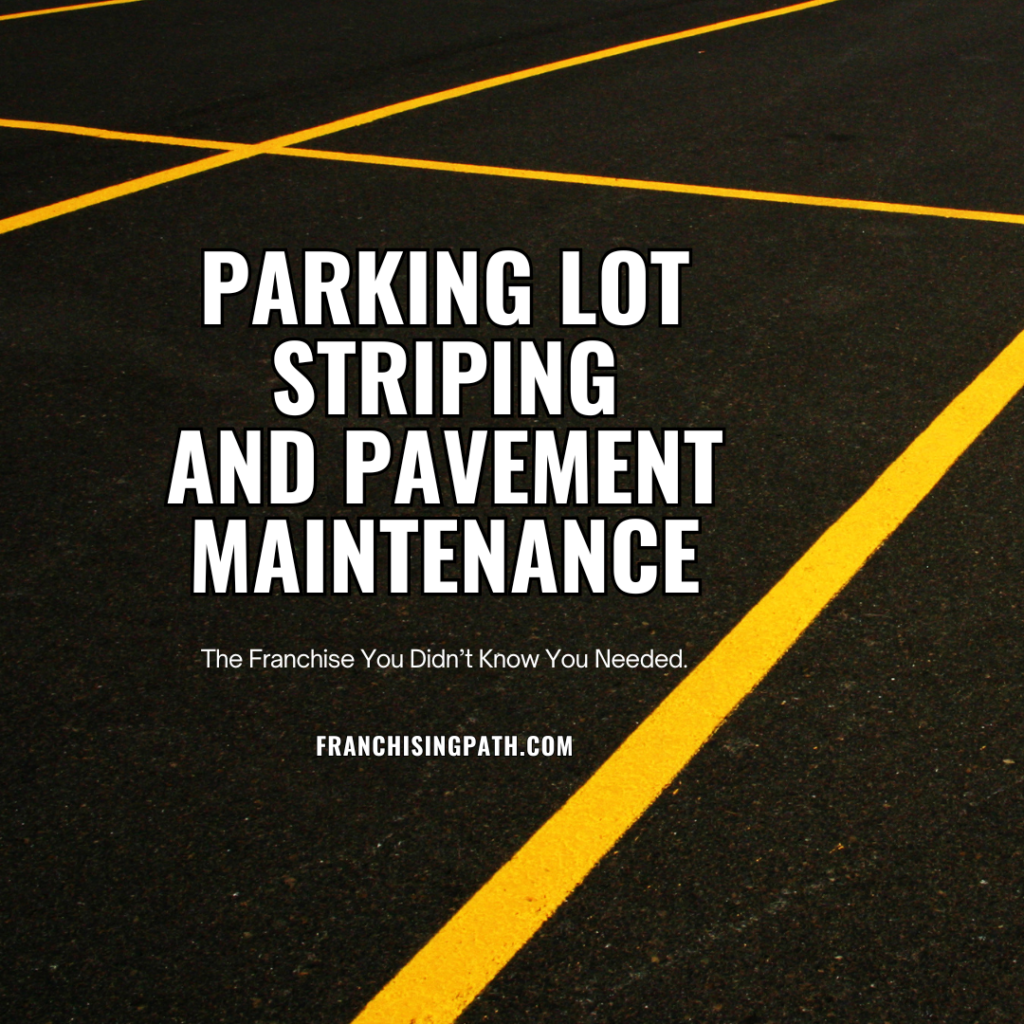
Fresh parking lot striping lines on a commercial asphalt surface
Where structure, safety, and consistency quietly create a business advantage.

Fitness Franchise Ownership Built for Capacity Consistency and Growth

Why Flexible Scheduling Is Reshaping Fitness Franchise Ownership


Most people do not stop going to the gym because they stop caring about fitness.

They stop because it starts to feel harder than it should.

They rush from work. They miss a class by a few minutes. They feel behind before the workout even begins. Over time, that friction adds up. Not enough to quit immediately, but enough to quietly disengage.

What has changed is not the desire for results.
What has changed is tolerance for inconvenience.

That same shift is happening on the ownership side.

Prospective franchise owners are not just asking whether a concept works. They are asking whether it works within the realities of their life. Whether it scales without constant staffing stress. Whether growth adds clarity or chaos.

Somewhere between those two realities a different approach to fitness ownership has started to stand out.


If this shift feels familiar, it’s worth talking through what it means for ownership.


The Quiet Limitations of Traditional Class Based Studios

On the surface, the traditional class schedule makes sense.

Classes start on the hour. Everyone arrives together. Energy spikes. Then it resets.

But owners often discover the limitations gradually.

A full class does not mean a full day.
A missed class means revenue that disappears permanently.
Peak hours feel crowded while off hours feel empty.

Even when demand is strong, growth hits a ceiling. To earn more, the studio must add more classes, more staff, or more space. Each option adds cost and complexity.

Nothing is broken.
It is simply a structure designed for a time when people planned their day differently.

That realization often arrives quietly, usually after the business is already running.


Rethinking How a Studio Actually Moves

At some point, owners start questioning not the workout, but the flow.

What if the studio did not depend on everyone arriving at once?
What if sessions overlapped instead of resetting?
What if the experience felt continuous rather than scheduled?

A flex time fitness model starts with that question.

Workouts are structured around stations and completed in forty minutes. Members enter at regular intervals instead of fixed start times. The space stays active, but not rushed.

For members, the shift feels subtle but meaningful. They arrive when it works. They are not late. They are not watching the clock.

For owners, the impact is structural. Capacity increases without extending hours or square footage. Utilization becomes steadier. The studio develops a rhythm instead of peaks and valleys.

This is often the moment when owners realize the business can work differently.


Capacity Without the Feeling of Being Maxed Out

There is a common assumption that higher capacity automatically means more stress.

In practice, stress usually comes from transitions, not volume.

When a studio is built around constant resets, every class requires setup, teardown, and coordination. When sessions flow continuously, that friction fades.

Because workouts overlap, the day feels smoother. Coaches are not racing the clock. Members are not bottlenecked at the door. Systems handle structure while people focus on experience.

Payroll becomes easier to forecast. Schedules stabilize. Performance metrics become clearer because attendance spreads naturally across the day.

Owners often describe this shift not as growth, but as relief.


If this made you reconsider how revenue is really created, let’s walk through it.


Technology That Carries Its Share of the Load

In many fitness concepts, technology is added for appearance.

Here, it serves a different purpose.

Virtual trainers guide movement. Visual cues keep sessions aligned. Timers create consistency without constant instruction.

This does not replace human connection. It protects it.

Coaches are freed to focus on form, encouragement, and culture instead of repeating instructions. Quality stays consistent even during busy hours.

For owners, this reduces dependence on highly specialized staff while maintaining standards. The business does not hinge on one personality or one perfect hire.

Systems support people instead of stretching them thin.


Why Members Stay Longer When Scheduling Gets Easier

Retention is rarely about motivation.
It is about friction.

When showing up feels simple, people show up more often. When attendance becomes consistent, habits form. When habits form, memberships last.

Flexible scheduling removes one of the biggest silent barriers in fitness. Members no longer need to plan their day around a class. They fit the workout into their life instead of rearranging everything else.

That consistency stabilizes revenue.

When revenue stabilizes, marketing pressure eases. When pressure eases, owners gain room to make thoughtful growth decisions rather than reactive ones.

This is how sustainable businesses are built quietly over time.


If predictable revenue matters to you, this deserves a deeper conversation.


Ownership That Allows Presence Without Burnout

This model supports absentee ownership, but it rewards engaged leadership.

Successful owners are not micromanaging daily sessions, but they are not disconnected either. They understand their systems. They trust their team. They protect culture.

With a small staff and defined processes, the business becomes manageable. Owners can step back without losing visibility. They can stay involved without being tied to the floor.

This balance appeals to professionals who want ownership that fits alongside their life rather than consuming it.


Training and Support That Reduce Guesswork

New owners are not expected to figure things out alone.

Training focuses on operations, technology, marketing, and member experience. Expectations are clear early. Standards are reinforced through ongoing support.

The goal is consistency without rigidity.

Owners follow proven systems, but they are not boxed in. Execution matters more than improvisation. Support is present without being intrusive.

This structure allows owners to focus on running the business well instead of reinventing it.


Understanding support upfront can save years of frustration later.


Why This Model Matches How People Actually Live

The fitness industry continues to grow, but attention spans are shorter and expectations are higher.

People want efficiency without intensity overload.
They want structure without pressure.
They want environments that feel intentional.

This model aligns with those behaviors. It is not built on trends or personalities. It is built on how people actually move through their day.

That alignment is what allows concepts like this to last.


Who Tends to Be Drawn to This Approach

This opportunity often resonates with individuals who value:

  • Operational clarity
  • Predictable revenue
  • Technology supported systems
  • Community driven environments
  • Long term scalability

Industry experience helps, but it is not required. Discipline, leadership, and follow through matter more.

People who do well here are usually not chasing excitement. They are building something sustainable.


If this feels familiar, there’s a reason it stood out.


Deciding With Clarity Instead of Momentum

Franchise ownership works best when decisions are not rushed.

Understanding how a business operates day to day, how it grows, and how it fits into your life matters more than surface level appeal.

The right opportunity does not create pressure. It creates alignment.

If you are exploring fitness franchise ownership and want to assess whether this approach fits your goals, a conversation is often the clearest next step.


If you want to stop circling opportunities and start evaluating what actually fits your goals, let’s talk.


Athletic woman performing a kettlebell workout in a modern high intensity fitness studio designed for flexible member scheduling
A fitness franchise model designed to maximize studio usage while improving member experience.

Why Valet Trash Franchise Ownership Is Quietly Gaining Momentum

Some of the most profitable franchise businesses don’t rely on trends, foot traffic, or consumer impulse spending.

They rely on something far simpler: solving a problem that never goes away.


Across the country, millions of apartment residents generate trash every single day. Property managers are expected to maintain clean communities, reduce complaints, and increase resident satisfaction all without increasing operational headaches.

This is where a specific service-based franchise model has quietly gained traction, especially among owners looking for recurring revenue, long-term contracts, and scalability without retail complexity.


See how this type of franchise actually works.


A Growing Industry Hiding in Plain Sight


Apartment valet trash services have become an expected amenity in many communities.

Residents no longer want to haul trash across large complexes, late at night, in bad weather, or with physical limitations. Property managers, in turn, benefit from cleaner hallways, fewer complaints, and increased retention.

What many people don’t realize is how underpenetrated this market still is.

Out of tens of millions of apartment units in the U.S., only a fraction currently use valet trash services. That gap represents opportunity especially in secondary and tertiary markets where demand already exists but service providers are limited.


Why Recurring Revenue Changes the Ownership Experience


One of the biggest advantages of this franchise model is contract structure.

Valet trash services are typically sold on multi-year agreements, often ranging from three to five years. Once a property is secured, revenue becomes predictable and consistent.

You don’t need hundreds of customers to build a meaningful business. In many cases, a relatively small number of well-managed properties can generate reliable monthly income.

This kind of predictability allows owners to plan, scale intentionally, and avoid the constant pressure of chasing one-off sales.


Explore predictable franchise models like this.


Two Complementary Services, One Business Model


What makes this opportunity especially compelling is that it combines two high-demand services into one operation:


Apartment Valet Trash

  • Nightly or scheduled doorstep pickup
  • Long-term property contracts
  • Minimal customer churn
  • Predictable labor scheduling


Junk and Bulk Item Removal

  • Furniture and appliance removal during move-ins and move-outs
  • On-demand services with higher ticket values
  • Strong add-on revenue from existing relationships


Instead of relying on a single revenue stream, owners benefit from both recurring income and supplemental high-margin jobs, often from the same property management clients.


Technology That Creates a Competitive Advantage


In service-based franchises, efficiency and transparency matter.

Advanced mobile technology now allows customers to receive instant pricing based on photos, eliminating guesswork and improving trust. Billing transparency, documentation, and reporting tools also reduce friction with property managers, one of the biggest reasons contracts get renewed year after year.

For franchise owners, this means fewer disputes, faster approvals, and smoother operations.

Technology doesn’t replace leadership but it amplifies it.


Why Property Managers Say Yes


From a property management perspective, this service checks every box:

  • Residents get convenience and cleaner communities
  • Management reduces complaints and maintenance issues
  • The cost is passed to residents, not absorbed by ownership
  • The property gains a new revenue stream

It’s rare to find an amenity that benefits all parties equally. That’s why these services are often described as easy to sell and hard to replace once implemented.


No Industry Experience Required


This franchise model isn’t built for waste industry veterans.

It’s built for owners who are good at:

  • Managing people
  • Building relationships
  • Following systems
  • Selling value, not volume


Training, operational support, and established systems allow owners to focus on growth instead of technical complexity. Many successful franchisees entered with no prior experience in trash, recycling, or junk removal.

The model rewards consistency, execution, and leadership not technical expertise.


Find out if this kind of ownership fits your background.


Scalability Without Retail Overhead


Unlike retail franchises, this model avoids:

  • Expensive buildouts
  • Long construction timelines
  • Customer-facing storefronts
  • High fixed overhead


Routes, staffing, and contracts can be scaled methodically. Owners often begin with a manageable territory and expand through additional properties, equipment, or service lines.

For those seeking semi-absentee ownership, this structure provides flexibility as systems mature.


The Bigger Picture


Waste removal isn’t glamorous but it’s essential.


Americans generate massive amounts of waste every year, and multi-family housing continues to grow. Businesses that support this infrastructure aren’t going away. In fact, they tend to perform well even during economic uncertainty because the need doesn’t disappear.


This is the kind of franchise that doesn’t rely on hype. It relies on necessity.


Is This the Right Franchise Path for You?


This opportunity tends to resonate with owners who value:

  • Predictable income
  • Long-term client relationships
  • Operational simplicity
  • Scalable service models
  • Recession-resistant demand


If you’re exploring franchise ownership and want to understand whether a service-based, recurring revenue model like this aligns with your goals, the right next step isn’t choosing a brand—it’s gaining clarity.


Some of the strongest franchise businesses don’t ask, “What’s exciting right now?”

They ask, “What problem will still need solving ten years from now?”

This model answers that question clearly.


You don’t need more research. You need perspective. Book a call and let’s walk through it.


Apartment valet trash service representing recurring revenue franchise ownership
A growing number of franchise owners are building predictable income by solving a simple, everyday problem.


Why Most Franchise Plans Stall Before They Ever Begin

Every year, especially early on, I hear the same thing from professionals exploring franchising:


“This is the year I finally do it.”


It reminds me a lot of the annual New Year’s resolution to lose weight, something I was once guilty of myself. January starts with motivation, optimism, and big intentions. But by spring, many of those resolutions quietly fade not because the goal was wrong, but because the approach was.


Franchise conversations often follow the same pattern.

Not because franchising stopped making sense.
Not because the right opportunities weren’t out there.
But because most people start in the wrong place.


Franchise ownership is often treated like a transaction. Pick a brand. Review the numbers. Sign the agreement. In reality, it’s a shift in how you think, operate, and show up every day.

That disconnect is where most franchise dreams stall before they ever begin.


Where First Time Buyers Go Off Track

Most people believe success comes from finding the perfect franchise.

What actually matters more is finding the right fit.

I’ve watched buyers get stuck comparing logos, trends, and buzz, while skipping the deeper work that determines whether a business will truly work for them.

Here’s what typically happens:

  • They underestimate how much clarity they need around their lifestyle goals.
  • They overestimate how much a brand will “run itself.”
  • They assume systems replace leadership, instead of supporting it.
  • And they don’t prepare for the mental shift from employee thinking to owner responsibility.

Franchising lowers risk, but it does not remove accountability. When that reality hits late in the process, momentum fades and decisions stall.


The buyers who move forward confidently don’t rush into brands. They slow down at the beginning and ask better questions.

They start with alignment instead of excitement.

Before reviewing concepts, they get clear on things like:

  • How involved do I realistically want to be day to day
  • Do I want predictable structure or more flexibility
  • Am I energized by customers or better behind the scene
  • What kind of stress do I handle well and what drains me
  • What does success actually look like three to five years out

This clarity becomes a filter. Instead of chasing every opportunity, the right ones stand out quickly.


Understanding Yourself Is Part of Due Diligence

One of the most overlooked steps in franchising is an honest self assessment.

Every model rewards certain strengths and exposes certain gaps. The goal is not to be perfect. The goal is to choose a system that amplifies what you already do well and supports what you do not.

Some owners thrive in people driven environments.
Others prefer operational precision.
Some want to scale multiple units.
Others want one strong location that fits their life.

None of these paths are wrong. Problems arise when buyers choose a model that clashes with who they are or how they want to live.


Look Past The Brand And Study The Model

Strong branding attracts attention. Strong systems create sustainability.

The smartest buyers focus less on how exciting a concept looks and more on how it actually functions.

They study:

  • How revenue is generated and repeated
  • How labor is structured
  • How owners spend their time after launch
  • How support shows up after the opening phase
  • How predictable the economics really are

This is where clarity replaces hype. When you understand how a business works in real life, confidence follows.


Why Guidance from a Franchise Consultant Changes Outcomes

Trying to navigate franchising alone often leads to overwhelm. Too many options. Conflicting advice. Endless research with no clear direction.

Working with an experienced franchise consultant shifts that experience.

The right guidance helps you slow down, challenge assumptions, and focus on opportunities that actually align with your goals, skills, and risk comfort. It also helps you avoid emotional decisions that feel right in the moment but create friction later.

Franchise success rarely starts with a brand name. It starts with positioning yourself correctly before choosing one.


A Pattern I’m Seeing Right Now

At certain times of year, consumer behavior resets. People recommit to health, balance, and long term habits. Businesses that align with those shifts tend to gain traction, especially models built around recurring services and membership based engagement.

Health, wellness, and self care concepts continue to attract interest because they are driven by lifestyle needs, not short term trends. Many of these models focus on experience, consistency, and repeat visits, creating predictable revenue when operated well.

The owners who thrive in these spaces are typically those who value community, quality, and leadership. They understand they are building an experience as much as a business.


The Real Starting Line

Franchise ownership doesn’t begin when you sign an agreement. It begins when you decide to approach the process intentionally.

The buyers who succeed are not the ones who found the perfect franchise. They are the ones who prepared themselves, asked the right questions, and chose a model that fit their life as well as their financial goals.

If you’ve been thinking about exploring franchise ownership but want to do it thoughtfully and without pressure, I’m happy to have that conversation.


The difference between people who move forward and those who stall usually comes down to one thing: understanding what they’re actually looking for.

If you want to sort that out with someone who’s been through it, I’m always open to a real conversation. 

Let’s chat!


New Year goal planning concept representing stalled franchise ownership decisions
Most franchise plans don’t fail because of the opportunity—they stall because the starting point is wrong.

A Smarter Way to Own a Beauty Franchise Without Running a Salon

A Smarter Salon Franchise Model For Modern Beauty Entrepreneurs

There is a quiet shift happening in the beauty industry, and it is being driven by experienced professionals who know exactly what they want next.

Across the country, established stylists are stepping away from traditional salon environments. This decision is rarely about losing passion for the craft. Instead, it reflects a deeper desire for control. Control over schedules, income, client relationships, and the environment they work in every day. After years inside commission based salons or rigid rental setups, many professionals are looking for something that respects both their skill and their independence.

That shift has created space for a different kind of salon franchise model to emerge, one that aligns the goals of independent beauty professionals with those of thoughtful business owners.

Explore whether this type of franchise ownership aligns with your goals.


A New Approach to Salon Ownership

This franchise concept is designed around a simple but powerful idea. Independent beauty professionals operate their own businesses inside a professionally designed, elevated space. They bring their own clients, manage their own schedules, and build their brands on their own terms. As the franchise owner, your role is not to manage talent behind the chair. Your role is to provide the environment, structure, and consistency that attracts high quality professionals and keeps them there.

From an ownership perspective, this creates a fundamentally different experience than traditional salons. You are not responsible for providing services. You are not hiring, training, or replacing stylists. Instead, you are operating a space that supports entrepreneurship within the beauty industry.

See how ownership is structured and what day to day involvement actually looks like.


Why This Salon Franchise Model Works

From my standpoint, the strength of this concept lies in how clean and efficient the business model is.

There are no employees performing services behind the chair. Stylists operate independently, which significantly reduces payroll complexity and staffing risk. Day to day operations can be supported with minimal personnel, often just one or two part time team members focused on hospitality, cleanliness, and overall experience.

The physical footprint is intentionally smaller than many traditional salons, yet revenue per square foot remains strong. This efficiency matters, especially in markets where commercial real estate costs continue to rise. Smaller spaces also mean lower build out costs and more flexibility when selecting locations.

Demand is already proven. Existing locations operate at full capacity, with waitlists of experienced professionals looking to join the space. When independent stylists actively seek out a specific environment, it signals strong brand alignment and long term staying power.

Perhaps most important for many prospective owners, no background in beauty is required. This is not a skills based business where the owner must understand the technical side of services. It is an operational and community driven model that rewards leadership, organization, and consistency.


Multiple Revenue Streams Without Added Complexity

In addition to chair or studio rentals, owners benefit from thoughtfully curated retail product offerings that align naturally with the professionals in the space. These products are selected to complement the services being provided, creating an additional revenue stream without adding operational burden.

Retail sales are handled within the existing environment and client flow. There is no need for extensive inventory management or aggressive sales tactics. The products support the overall experience and lifestyle of the clientele, which allows retail to function as a natural extension of the business rather than a separate operation.

Walk through the numbers, responsibilities, and expectations with me.


A Business Built Around Community and Culture

One of the most overlooked aspects of successful franchise ownership is culture. This model places community at the center of the experience.

Stylists choose this environment intentionally. They are not simply renting a chair. They are joining a space that reflects their professionalism and supports their growth. When professionals feel respected and supported, retention increases and turnover decreases. That stability benefits everyone involved, including the owner.

As an owner, you are building a business rooted in relationships, consistency, and shared standards. You are creating a space where talented individuals want to stay, grow, and refer others like them.


Proven Demand and Intentional Growth

Seven locations are already operating successfully, each filled with established professionals who made a deliberate choice to be there. This kind of organic demand speaks volumes. It suggests that the model resonates not just on paper, but in real world application.

Rather than relying on constant recruitment or discounting, this concept grows through reputation and experience. Stylists talk to one another. When a space delivers what it promises, word spreads quickly within professional circles.

Learn what attracts established professionals to this model and why locations fill quickly.


A Balanced Ownership Experience

For the right owner, this franchise offers a balance that can be difficult to find in service based businesses. It provides stability through recurring rental income, flexibility through limited day to day involvement, and scalability for those interested in expanding to multiple locations.

This is particularly appealing to professionals transitioning out of corporate roles or those seeking to diversify their income streams. The model supports a manage the space approach rather than a work behind the chair mentality.

It is a business that rewards thoughtful oversight without demanding constant physical presence. With the right systems and team in place, owners can focus on growth, culture, and long term strategy.


Who This Franchise Is Best Suited For

This opportunity tends to resonate with individuals who value structure, aesthetics, and people driven businesses. Successful owners often have strong organizational skills, an eye for detail, and a genuine appreciation for community building.

You do not need prior salon experience. You do need the willingness to lead, support, and maintain standards. Owners who thrive in this model understand that their role is to protect the environment and culture that professionals value.

Let’s discuss whether this opportunity fits your lifestyle, experience, and long term plans.


Why This Model Makes Sense Today

The beauty industry continues to evolve, but the demand for personal care services remains resilient. Independent professionals are seeking better ways to work, and clients continue to prioritize consistent, high quality experiences.

This franchise model sits at the intersection of those trends. It provides autonomy for professionals and clarity for owners. It removes many of the pain points traditionally associated with salon ownership while preserving what matters most.

For individuals exploring franchise ownership in the beauty space, this is a concept worth serious consideration. It aligns with how professionals want to work today and how owners want to operate sustainable businesses.


Exploring Ownership Opportunities

If you have been searching for a franchise that makes sense both financially and operationally, this model deserves a closer look. Understanding how ownership works, what daily operations involve, and how the business scales is essential before making any decisions.

Sometimes the right opportunity is not loud or flashy. It is thoughtfully designed, well supported, and built to last.

To learn more about how this salon franchise model works and whether it aligns with your goals, schedule a call with me today! Let’s start our no-sales conversation.


Modern shared salon workspace designed for independent beauty professionals
A modern beauty franchise model that supports independent professionals while giving owners a clean, scalable business structure.

Should You Manage Your Franchise Yourself or Hire a Manager? Here’s What Most First-Time Owners Get Wrong

There’s a moment nearly every first-time franchise buyer experiences.

You’ve done the research.
You’ve reviewed the numbers.
You’ve found a brand that feels right.

Then the real question shows up:

Should I manage this franchise myself, or should I hire someone to run it for me?

On the surface, it sounds like a simple operational choice. In reality, it’s one of the most important decisions you’ll make as a franchise owner because it directly impacts your time, your stress level, your confidence, and the long-term success of the business.

After decades in franchising and ownership across multiple brands, one thing is clear:

Most first-time owners don’t get this decision wrong because they’re careless.
They get it wrong because they underestimate what this choice actually affects.


Walk through this decision with someone who’s done it before.


Why This Decision Shapes Everything That Follows

Whether you manage the franchise yourself or hire a manager early sets the tone for:

  • How quickly you understand the business
  • How well you lead your team
  • How confident you feel making decisions
  • How scalable the business becomes
  • How much control you truly have

This isn’t about ego or proving you can “do it all.”
It’s about building the right foundation so the business supports your life rather than consuming it.

Managing the Franchise Yourself — The Real Advantages Most Buyers Overlook

Being hands-on early gives you insight that no report, dashboard, or update can replace.

When you’re physically present in the business, you don’t just see what’s happening, you understand why it’s happening.

What Hands-On Owners Learn Faster

First-time owners who manage their franchise initially gain clarity around:

  • What excellent service actually looks like day to day
  • Which team members naturally step into leadership
  • How customers behave and what truly matters to them
  • Where revenue is really generated
  • Which problems repeat and how to solve them efficiently

This level of understanding becomes invaluable later—especially if your long-term vision includes multi-unit ownership or stepping into a true leadership role.

The Trade-Off: Time and Energy

Hands-on management does require commitment, especially early on. That often includes:

  • Being present for openings and closings
  • Handling customer questions or concerns
  • Training new team members
  • Learning systems through real-world experience

For many first-time owners, this phase isn’t about staying forever, it’s about learning deeply so you don’t guess later.


See how hands-on ownership plays out for first-time buyers.


Hiring a Manager — When It Actually Elevates the Business

Hiring a manager can be a smart and strategic move but only when done for the right reasons and at the right time.

This approach works best for owners who already understand the business well enough to lead with confidence, even if they aren’t present every day.

What Successful Manager-Led Owners Have in Common

Owners who thrive with a manager in place usually:

  • Understand the operational basics
  • Know how long tasks should realistically take
  • Recognize early signs of performance issues
  • Stay involved through consistent check-ins
  • Hold managers accountable with clarity, not guesswork
  • Support leadership without micromanaging

In these situations, a strong manager doesn’t replace the owner, they extend the owner’s leadership.


See whether a manager-led approach fits your lifestyle.


The Question Isn’t “Which Is Better?”; It’s “Which Fits Your Goals?”

There is no universal right answer.

The better choice depends on:

  • Your lifestyle
  • Your financial runway
  • Your long-term vision
  • How involved you want to be

The mistake first-time buyers make is choosing based on convenience instead of strategy.

If You Start Hands-On, Use This Mindset

Managing the franchise yourself early doesn’t mean buying yourself a job if you approach it correctly.

How to Avoid Getting Stuck in the Business

Successful hands-on owners focus on:

  • Learning the model deeply
  • Building systems that allow delegation
  • Developing team members early
  • Gradually replacing themselves in daily tasks

This path builds confidence and clarity, allowing you to step back intentionally not reactively.


Have a grounded conversation about what ownership really involves.


If You Hire a Manager Early, Protect the Investment

Some owners choose to hire a manager while keeping their primary career, especially during the ramp-up phase.

When done correctly, this approach allows you to:

  • Maintain outside income
  • Preserve early cash flow
  • Manage the manager effectively
  • Stay focused on leadership instead of tasks
  • Remain involved enough to protect your investment

This is often ideal for owners who want flexibility without disengagement.

The Common Mistake That Costs Owners the Most

The most costly mistake isn’t choosing one path over the other.

It’s choosing without clarity.

Owners run into trouble when they:

  • Hire a manager without understanding the business
  • Stay hands-on without building systems
  • Step away too early
  • Confuse “less involvement” with “less responsibility”

A franchise is not passive income.
It’s a real business with real people and real expectations.


Get clarity without committing to anything yet.


Leadership Is the Constant Regardless of the Structure

Whether hands-on or manager-led, successful franchise owners share one trait: intentional leadership.

They stay engaged enough to guide direction, uphold standards, and protect the brand—without being trapped in daily operations forever.

Getting Clarity Before You Commit Matters

If you’re evaluating your first franchise, this decision deserves more than guesswork.

Sometimes clarity comes from walking through real scenarios, not marketing materials.


👉 Have a conversation about what ownership realistically looks like
https://intro.franchisingpath.com/rp

Final Thought

Both paths can work beautifully when they align with your goals.

The owners who succeed long term don’t rush this decision.
They choose intentionally, with their future in mind.

If you’re asking the question, you’re already thinking like an owner.

And that’s the right place to start.


First-time franchise owner deciding whether to manage the business personally or hire a manager
One of the most important decisions first-time franchise owners face is choosing between hands-on management and hiring a manager early.
  • Page 1
  • Page 2
  • Page 3
  • Interim pages omitted …
  • Page 39
  • Go to Next Page »

Footer

Franchising Path logo footer

Call Today: (866) 714-7703

Company
  • About Me
  • Success Stories
  • Schedule a Call
  • Blog
  • Franchise Quiz
  • Franchise Requirements
Services
  • Our Process
  • Franchise Consulting
  • FAQ’s
  • Terms & Conditions
Connect
LinkedIn logo
YouTube logo
Facebook logo
Instagram logo

© 2026 Franchising Path. All Rights Reserved. Privacy Policy

franchising-guide

Download Your Free industry Guide Today

Get The Ultimate Guide to Franchising as a Side Hustle

Leading franchise expert reveals how to keep your day job and be your own boss! Enter your email to get the free report.

ultimate-guide-book