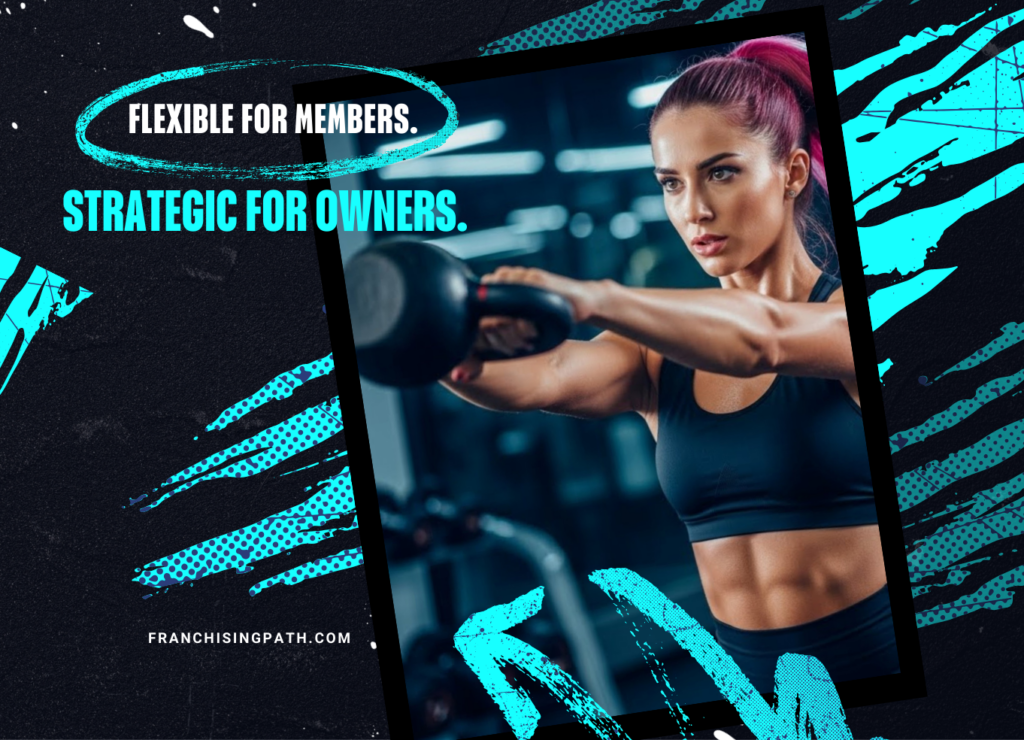
Why Flexible Scheduling Is Reshaping Fitness Franchise Ownership
Most people do not stop going to the gym because they stop caring about fitness.
They stop because it starts to feel harder than it should.
They rush from work. They miss a class by a few minutes. They feel behind before the workout even begins. Over time, that friction adds up. Not enough to quit immediately, but enough to quietly disengage.
What has changed is not the desire for results.
What has changed is tolerance for inconvenience.
That same shift is happening on the ownership side.
Prospective franchise owners are not just asking whether a concept works. They are asking whether it works within the realities of their life. Whether it scales without constant staffing stress. Whether growth adds clarity or chaos.
Somewhere between those two realities a different approach to fitness ownership has started to stand out.
If this shift feels familiar, it’s worth talking through what it means for ownership.
The Quiet Limitations of Traditional Class Based Studios
On the surface, the traditional class schedule makes sense.
Classes start on the hour. Everyone arrives together. Energy spikes. Then it resets.
But owners often discover the limitations gradually.
A full class does not mean a full day.
A missed class means revenue that disappears permanently.
Peak hours feel crowded while off hours feel empty.
Even when demand is strong, growth hits a ceiling. To earn more, the studio must add more classes, more staff, or more space. Each option adds cost and complexity.
Nothing is broken.
It is simply a structure designed for a time when people planned their day differently.
That realization often arrives quietly, usually after the business is already running.
Rethinking How a Studio Actually Moves
At some point, owners start questioning not the workout, but the flow.
What if the studio did not depend on everyone arriving at once?
What if sessions overlapped instead of resetting?
What if the experience felt continuous rather than scheduled?
A flex time fitness model starts with that question.
Workouts are structured around stations and completed in forty minutes. Members enter at regular intervals instead of fixed start times. The space stays active, but not rushed.
For members, the shift feels subtle but meaningful. They arrive when it works. They are not late. They are not watching the clock.
For owners, the impact is structural. Capacity increases without extending hours or square footage. Utilization becomes steadier. The studio develops a rhythm instead of peaks and valleys.
This is often the moment when owners realize the business can work differently.
Capacity Without the Feeling of Being Maxed Out
There is a common assumption that higher capacity automatically means more stress.
In practice, stress usually comes from transitions, not volume.
When a studio is built around constant resets, every class requires setup, teardown, and coordination. When sessions flow continuously, that friction fades.
Because workouts overlap, the day feels smoother. Coaches are not racing the clock. Members are not bottlenecked at the door. Systems handle structure while people focus on experience.
Payroll becomes easier to forecast. Schedules stabilize. Performance metrics become clearer because attendance spreads naturally across the day.
Owners often describe this shift not as growth, but as relief.
If this made you reconsider how revenue is really created, let’s walk through it.
Technology That Carries Its Share of the Load
In many fitness concepts, technology is added for appearance.
Here, it serves a different purpose.
Virtual trainers guide movement. Visual cues keep sessions aligned. Timers create consistency without constant instruction.
This does not replace human connection. It protects it.
Coaches are freed to focus on form, encouragement, and culture instead of repeating instructions. Quality stays consistent even during busy hours.
For owners, this reduces dependence on highly specialized staff while maintaining standards. The business does not hinge on one personality or one perfect hire.
Systems support people instead of stretching them thin.
Why Members Stay Longer When Scheduling Gets Easier
Retention is rarely about motivation.
It is about friction.
When showing up feels simple, people show up more often. When attendance becomes consistent, habits form. When habits form, memberships last.
Flexible scheduling removes one of the biggest silent barriers in fitness. Members no longer need to plan their day around a class. They fit the workout into their life instead of rearranging everything else.
That consistency stabilizes revenue.
When revenue stabilizes, marketing pressure eases. When pressure eases, owners gain room to make thoughtful growth decisions rather than reactive ones.
This is how sustainable businesses are built quietly over time.
If predictable revenue matters to you, this deserves a deeper conversation.
Ownership That Allows Presence Without Burnout
This model supports absentee ownership, but it rewards engaged leadership.
Successful owners are not micromanaging daily sessions, but they are not disconnected either. They understand their systems. They trust their team. They protect culture.
With a small staff and defined processes, the business becomes manageable. Owners can step back without losing visibility. They can stay involved without being tied to the floor.
This balance appeals to professionals who want ownership that fits alongside their life rather than consuming it.
Training and Support That Reduce Guesswork
New owners are not expected to figure things out alone.
Training focuses on operations, technology, marketing, and member experience. Expectations are clear early. Standards are reinforced through ongoing support.
The goal is consistency without rigidity.
Owners follow proven systems, but they are not boxed in. Execution matters more than improvisation. Support is present without being intrusive.
This structure allows owners to focus on running the business well instead of reinventing it.
Understanding support upfront can save years of frustration later.
Why This Model Matches How People Actually Live
The fitness industry continues to grow, but attention spans are shorter and expectations are higher.
People want efficiency without intensity overload.
They want structure without pressure.
They want environments that feel intentional.
This model aligns with those behaviors. It is not built on trends or personalities. It is built on how people actually move through their day.
That alignment is what allows concepts like this to last.
Who Tends to Be Drawn to This Approach
This opportunity often resonates with individuals who value:
- Operational clarity
- Predictable revenue
- Technology supported systems
- Community driven environments
- Long term scalability
Industry experience helps, but it is not required. Discipline, leadership, and follow through matter more.
People who do well here are usually not chasing excitement. They are building something sustainable.
If this feels familiar, there’s a reason it stood out.
Deciding With Clarity Instead of Momentum
Franchise ownership works best when decisions are not rushed.
Understanding how a business operates day to day, how it grows, and how it fits into your life matters more than surface level appeal.
The right opportunity does not create pressure. It creates alignment.
If you are exploring fitness franchise ownership and want to assess whether this approach fits your goals, a conversation is often the clearest next step.
If you want to stop circling opportunities and start evaluating what actually fits your goals, let’s talk.